DEF Treatment in Louisiana: Preventing Crystallization, Contamination & Downtime
Diesel Exhaust Fluid (DEF) is simple in theory, but in real-world operations across Louisiana it can become a source of costly downtime when it’s stored, handled, or dispensed improperly.
By Christy Cody
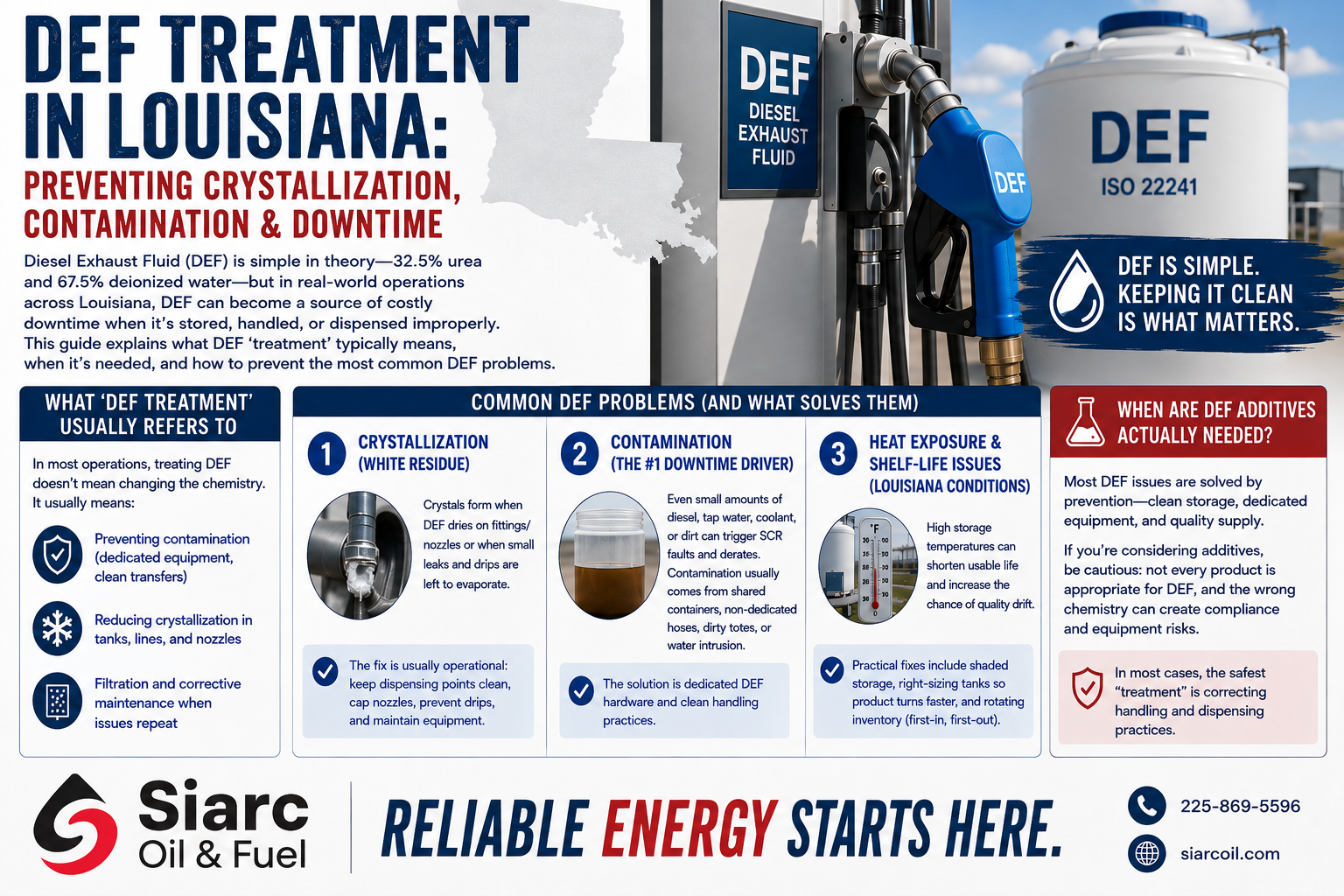
Diesel Exhaust Fluid (DEF) is simple in theory—32.5% urea and 67.5% deionized water—but in real-world operations across Louisiana, DEF can become a source of costly downtime when it’s stored, handled, or dispensed improperly. This guide explains what DEF ‘treatment’ typically means, when it’s needed, and how to prevent the most common DEF problems.
What ‘DEF treatment’ usually refers to
In most operations, treating DEF doesn’t mean changing the chemistry. It usually means preventing contamination, managing crystallization, and correcting storage/dispensing practices so DEF stays within ISO 22241 quality expectations.
- Preventing contamination (dedicated equipment, clean transfers)
- Reducing crystallization in tanks, lines, and nozzles
- Filtration and corrective maintenance when issues repeat
Common DEF problems (and what solves them)
1) Crystallization (white residue)
Crystals form when DEF dries on fittings/nozzles or when small leaks and drips are left to evaporate. The fix is usually operational: keep dispensing points clean, cap nozzles, prevent drips, and maintain equipment.
2) Contamination (the #1 downtime driver)
Even small amounts of diesel, tap water, coolant, or dirt can trigger SCR faults and derates. Contamination usually comes from shared containers, non-dedicated hoses, dirty totes, or water intrusion. The solution is dedicated DEF hardware and clean handling practices.
3) Heat exposure and shelf-life issues (Louisiana conditions)
High storage temperatures can shorten usable life and increase the chance of quality drift. Practical fixes include shaded storage, right-sizing tanks so product turns faster, and rotating inventory (first-in, first-out).
When are DEF additives actually needed?
Most DEF issues are solved by prevention—clean storage, dedicated equipment, and quality supply. If you’re considering additives, be cautious: not every product is appropriate for DEF, and the wrong chemistry can create compliance and equipment risks. In most cases, the safest ‘treatment’ is correcting handling and dispensing practices.
A practical DEF prevention checklist
- Use dedicated DEF tanks, hoses, pumps, and fittings
- Keep fill points clean and capped; prevent drips
- Store out of direct sun when possible; manage turnover
- Train teams: no shared containers or funnels
Need help diagnosing a DEF issue?
If you’re seeing repeated SCR faults, crystallization, or DEF quality concerns, Siarc Oil & Fuel can help you tighten up storage and dispensing practices and keep your operation moving. Contact us to discuss bulk DEF supply and best-practice handling for Louisiana conditions.
Next Step
Talk with the Siarc team about the products and delivery schedule that fit your operation.